Vendor-neutral
I don't sell or build the tools I recommend.
Fractional Chief AI Officer and founder of Life Automated AI. Based in Dallas–Fort Worth, working with leadership teams nationwide.
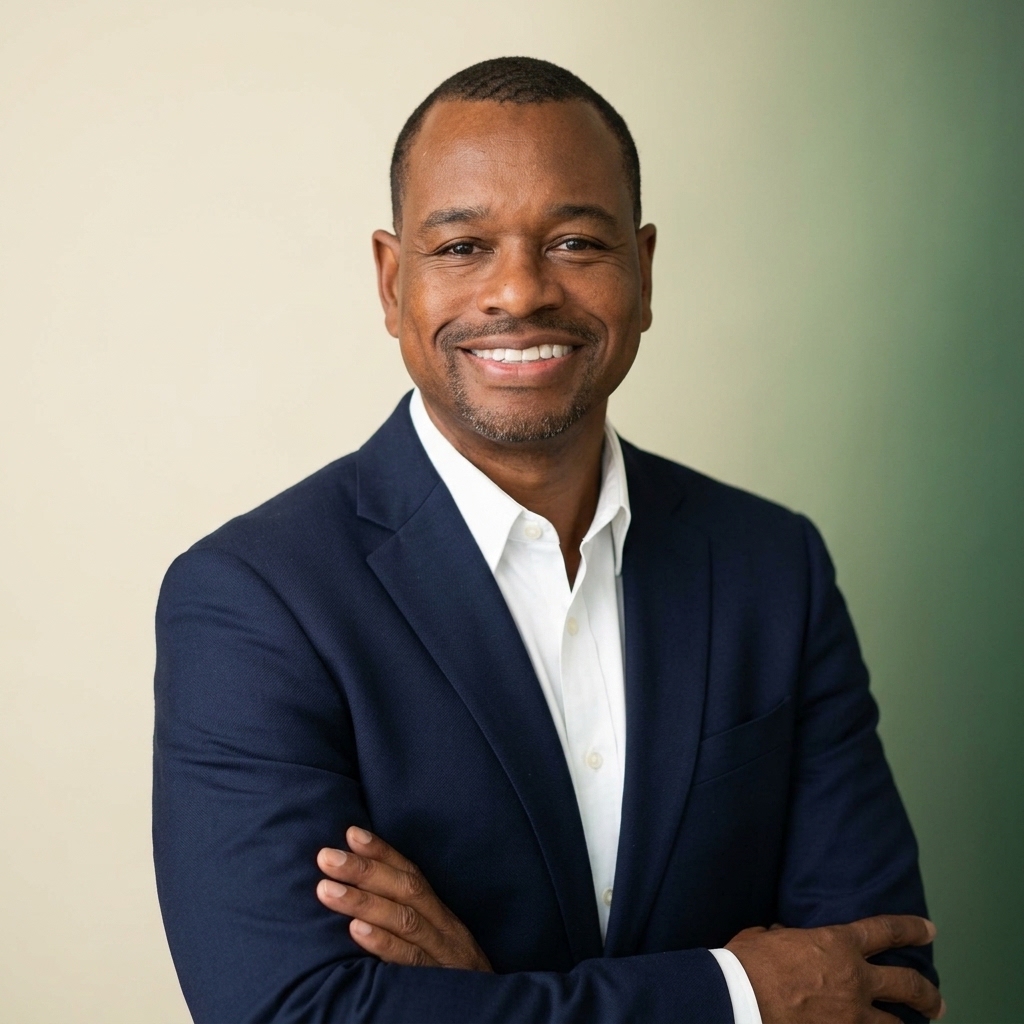
I'm an AI solutions architect and IT program leader with more than 15 years of experience leading enterprise technology programs. I hold a Doctor of Business Administration and an active PMP certification. I've also spent years building production AI myself: multi-agent systems, retrieval pipelines and model orchestration across GPT-4, Claude, Gemini and Llama.
I've spent my career leading technology programs where the stakes are operational, mostly in oil and gas manufacturing and in telecommunications. That work has included ERP upgrades, enterprise content management upgrades and migrations, organization-wide communications rollouts, and disaster recovery and business continuity planning. Most recently, I stood up a PMO from scratch: stage gates, approval processes, artifact generation and review, and the discipline of keeping every project's timeline and scope tied to the business's strategic goals.
I started Life Automated AI because I could see where AI was heading: into every part of how we live and work. That's the name. Life, automated. But as companies rushed to adopt AI, I kept seeing the same gap. Anyone can stand up an AI tool in an afternoon; almost no one was deciding how it should be governed. Leaders want what AI can do, but they also need it to operate inside clear boundaries that protect their data and intellectual property and keep their walls secure. So I refocused the practice on closing that gap: helping organizations see where they're exposed, and working with them to reduce it.
That focus connects directly to my doctoral research on Agile transformation in enterprise environments: why organizations struggle to change how they work, even when the benefits are clear. The same reluctance shows up with AI governance, and understanding it is half the work.
The work I'm proudest of is taking a traditional structure, the project management office, and giving it a modern operating model. AI helps guide and run the PMO and helps project managers generate their documents, while people keep every approval. That's the balance I bring to every engagement: use AI fully, and govern it deliberately.
Most AI risk isn't technical. It's an ownership problem: nobody has been given the job of deciding which tools are acceptable, what data may go into them, and who is accountable when something goes wrong. That's PMO governance (portfolio oversight, risk, controls and accountability) applied to AI, and it's the work I've done for my whole career.
I work best with CEOs, COOs and leadership teams, from growing companies to established enterprises, where AI is already in daily use and nobody has been given the job of owning it. I'm especially at home in manufacturing, energy and telecommunications, and in regulated or semi-regulated industries. The trigger is often a wake-up call: a client questionnaire about AI, a vendor asking how you govern it, or an employee who pasted something they shouldn't have.
I'm also the author of The Legacy Protection Blueprint, and I build and run my own AI products, including PMO Gateway and Legacy Shield AI. That keeps my advice grounded: I live with the governance decisions I recommend.
I don't sell or build the tools I recommend.
You work with me directly.
Every recommendation is scored and shown, including when the honest answer is 'not yet'.